Skip to product information
1 of 1

Fecal Egg Count (Worm and Coccidia Surveillance)

Fecal Egg Count (Worm and Coccidia Surveillance)

Regular price $28.00 NZD
Regular price Sale price $28.00 NZD
Sale Sold out
Taxes included. Shipping calculated at checkout.
Quantity

Regular fecal egg counts (FEC) are a great way to monitor your birds for signs of parasite infection. Only when the test indicates worms are present will you then need to step in with a treatment. Checking your flock in this way will help to give you peace of mind that your birds aren’t carrying unwelcome parasites that will impact their health, while reducing the need for regular worming doses.   

Important: If you don't automatically receive your digital instructions and FEC form after purchase, please send us an email at theavianempire@gmail.com

How it Works

Once you have purchased a FEC from our site,

  1. You will be emailed a form and instructions.
  2. Print and complete the form. Remember to use the same details as you do for purchase so we can find you.
  3. Collect a sample of fresh droppings and place in a double zip lock bag or plastic container.
  4. Mail the form and the sample to the address given.
  5. Results will be sent to Avian Empire to interpret and
  6. Avian Empire will then email the results on to you with a plan if needed. 

Please note: The sample can be taken from a single bird or as a pooled sample, combining droppings from up to six birds in one bag/container.

What you are Buying

  • A faecal egg count (FEC) to be performed by Vet Path Labs
  • Results interpreted by our avian vet, alongside suggestions of treatment if needed. 

Please note: this is a digital product. Nothing will be posted. Everything you need will be emailed to you after purchase (check spam/junk if it doesn’t appear).

FAQ

What is a Faecal Egg Count (FEC)?

An FEC measures the number of parasite eggs/oocysts in a stool sample. For birds, this helps assess common intestinal parasites (e.g. roundworm Ascaridia, caecal worm Heterakis, hairworm Capillaria) and coccidia (Eimeria oocysts).

Why do one?

  • Check if parasites are contributing to weight loss, poor growth, loose droppings, or pale combs.
  • Decide if treatment is needed and avoid unnecessary worming.
  • Re-check after treatment to confirm it worked and to monitor resistance risk.

Who is this for?

Backyard flocks, smallholders, rehabbers and breeders (chickens, ducks, pigeons/parrots, waterfowl). If you’re unsure whether an FEC suits your bird, our team can advise.

What’s included in your service?

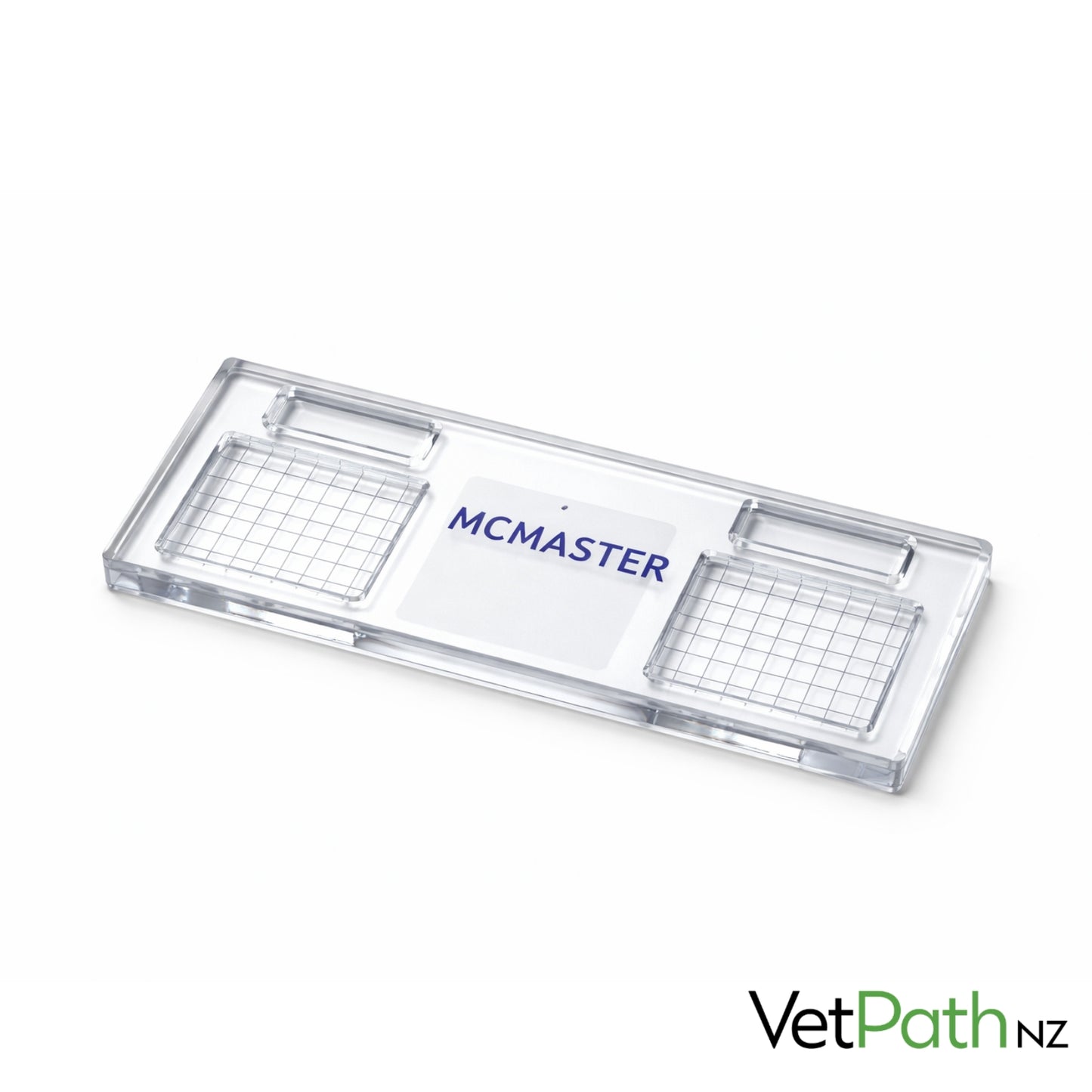
  • Lab FEC (McMaster/float) with identification of key parasite eggs/oocysts.
  • Clear result report with vet interpretation and next-step guidance.

How do I collect a sample? (Poultry & Waterfowl)

  1. Fresh only: collect droppings that are <12 hours old.
  2. Avoid contamination: no soil, litter, feed or water mixed in.
  3. Amount: ~1–2 teaspoons (5–10 g) of both regular and cecal droppings. For flocks, pool small amounts from 1 - 6 birds to get a representative sample.
  4. Container: seal in a clean zip-lock x 2 or specimen pot, label with name, species, date.
  5. Keep cool: refrigerate (do not freeze).
  6. Send Mon–Wed via overnight courier with a small cold pack in hot weather, plus the completed submission form.

Turnaround time

Typically 1–2 working days from when the sample arrives at our lab. We’ll email you your results as soon as we get them.

How often should I test?

  • 4 - 6 times a year or once a season.

Limitations to know

  • Some parasites shed eggs intermittently; a single negative doesn’t always rule out infection.
  • FECs don’t detect all pathogens (e.g. crop “canker”/Trichomonas needs a crop swab; bacterial/viral causes need different tests).
  • Severe illness or sudden deaths may warrant immediate vet care rather than waiting for FEC.

Can you test individual birds vs pooled samples?

Yes. Pooled FECs are cost-effective for flock screening. But you are more then welcome to run a individual sample.

Do you provide treatment advice?

Yes, your report includes your results from the lab, vet interpretation and a management plan.

Data & privacy

With your permission, anonymised results may contribute to our national bird-health dataset to map parasite trends by region. Personal details are never shared.

Terms and Conditions

By purchasing this product, you agree to the following terms and conditions:

1. Disclaimer

Fecal egg counts are a useful tool, but like any diagnostic test, results are not 100% accurate. Factors such as sample age, storage conditions, or courier delays can affect reliability.

If your birds are showing clinical signs, including visible worms in droppings, messy bottoms, weight loss, or lethargy, it may be advisable to follow a worming protocol regardless of test results.

If you need help setting up an effective worming programme, please reach out to us, we’re always happy to advise. You can also refer to our Worming Manual.

2. New Zealand Market Only

This service is available within New Zealand only. We do not accept or process samples sent from overseas.

3. Digital Product – All Sales Final

As this is a digital product, all sales are final. Once purchased, the order is non-refundable.

4. Responsibility for Sending Samples

You are responsible for collecting, packaging, and couriering your sample to the laboratory. Please keep your courier receipt and tracking number, as we cannot track items on your behalf.

5. Packaging Requirements

If a sample arrives leaking, damaged, or contaminated due to inadequate packaging, the laboratory may be unable to process it.

In this case, you will need to resubmit a new sample at your own cost. Please ensure samples are securely packaged and sealed before sending.

6. Turnaround Time & Result Delivery

Turnaround time may vary depending on courier delays and laboratory workload. Results will be emailed to the address provided at checkout.

We do not guarantee a specific delivery timeframe.

7. Use of Results

Results are provided for informational and supportive veterinary guidance only. They do not replace a veterinary consultation where clinical assessment is required.

View full details